


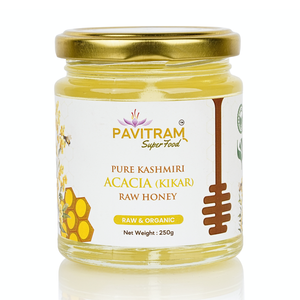
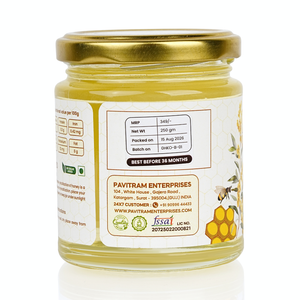
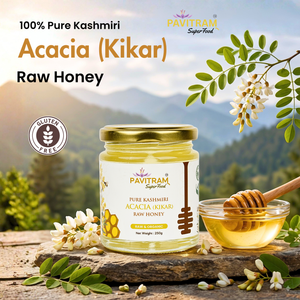
Raw Kashmiri Kikar Honey
Guaranteed Safe Checkout
Raw Kashmiri Kikar Honey
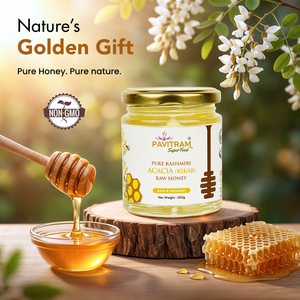
Raw Kashmiri Kikar Honey is a distinctive honey traditionally associated with the Kikar (Acacia) flowers of the Kashmir region. It is produced when honey bees collect nectar predominantly from Kikar blossoms, giving the honey its characteristic floral profile.
This honey is known for its delicate sweetness, mild floral aroma and naturally light to translucent golden colour. Its taste is less overpowering than darker honey varieties, making it suitable for people who prefer a subtle and naturally pleasant sweetness. The source describes Kikar Honey as a seasonal honey harvested primarily during the February to May period.
What Makes Kikar Honey Special?
• Monofloral Character – Produced predominantly from Kikar flower nectar.
• Kashmir Origin – Sourced from the hill and forest regions of Kashmir.
• Raw & Natural – Preserved in its raw form without unnecessary processing.
• Delicate Flavour – Mild sweetness with subtle floral notes.
• Light & Naturally Translucent – Typically ranges from translucent to light golden in appearance.
• Seasonal Honey – Mainly associated with the Kikar flowering and harvesting season.
• Natural Sweetener – A versatile alternative to refined sugar in everyday foods and beverages.
Natural Characteristics
Colour: Translucent to light golden, with a naturally warm tint.
Texture: Naturally thick, with consistency that may vary by batch.
Taste: Mild, delicate sweetness with floral notes.
Aroma: Light and naturally floral.
Floral Source: Kikar / Acacia flowers.
Bee Species: Apis mellifera (Western Honey Bee).
Harvesting Season: February to May, depending on flowering and local conditions.
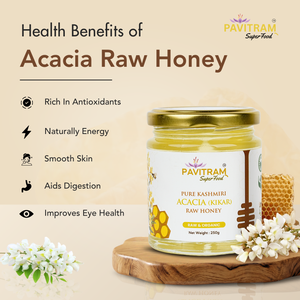
Key Benefits
Antioxidant Support
Honey naturally contains antioxidant compounds such as flavonoids and phenolic compounds, which contribute to its nutritional profile and help support the body's natural protection against oxidative stress.
Digestive Wellness
Honey has traditionally been used as part of everyday digestive and dietary routines.
Natural Energy
Its naturally occurring carbohydrates provide a convenient source of energy for daily activities.
Immune Wellness
Naturally occurring compounds in honey can contribute to overall daily wellness when consumed as part of a balanced diet.
Traditional Throat Comfort
Honey is traditionally used to soothe the throat and provide comfort during seasonal throat irritation.
Natural Skin Care
Honey is traditionally used in natural skincare routines for its moisturising and cleansing properties.
Note: Kikar Honey should be positioned as a natural food and sweetener. Specific claims related to disease treatment, allergy relief, memory enhancement, fertility, liver detoxification, weight loss or pregnancy benefits should not be made unless supported by appropriate product-specific evidence.
From Kikar Flower to Honey
Kikar Flowers → Bee Nectar Collection → Hive Transformation → Honey Extraction → Straining → Raw Packing
Apis mellifera bees collect nectar from the fragrant Kikar flowers and carry it to the hive. Inside the hive, the nectar undergoes natural transformation as bees reduce its water content and enzymes contribute to the conversion of nectar into honey. Beekeepers then extract the honey from the honeycomb and strain it to remove
unwanted particles.
How to Use
• Take directly as a natural sweetener.
• Add to lukewarm water or herbal beverages.
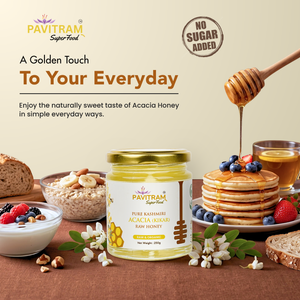
• Drizzle over toast, cereals, pancakes, yoghurt or fruits.
• Use in smoothies, desserts and homemade recipes.
• Use as a natural alternative to refined sugar in everyday food and beverages.
Avoid adding raw honey to boiling-hot beverages if the intention is to preserve its raw characteristics.
Quality & Storage
Raw Kikar Honey may naturally vary in colour, aroma, flavour and consistency depending on floral availability, season, environmental conditions and batch.
Store in a cool, dry and dark place, away from direct sunlight, moisture and excessive heat. Keep the jar tightly sealed and always use a clean, dry spoon.
Important Precaution
Honey should not be given to infants below 1 year of age. Honey contains naturally occurring sugars and should be consumed in moderation. Individuals with known bee-pollen or honey allergies should exercise caution.
| Size |
500 gm |
|---|
